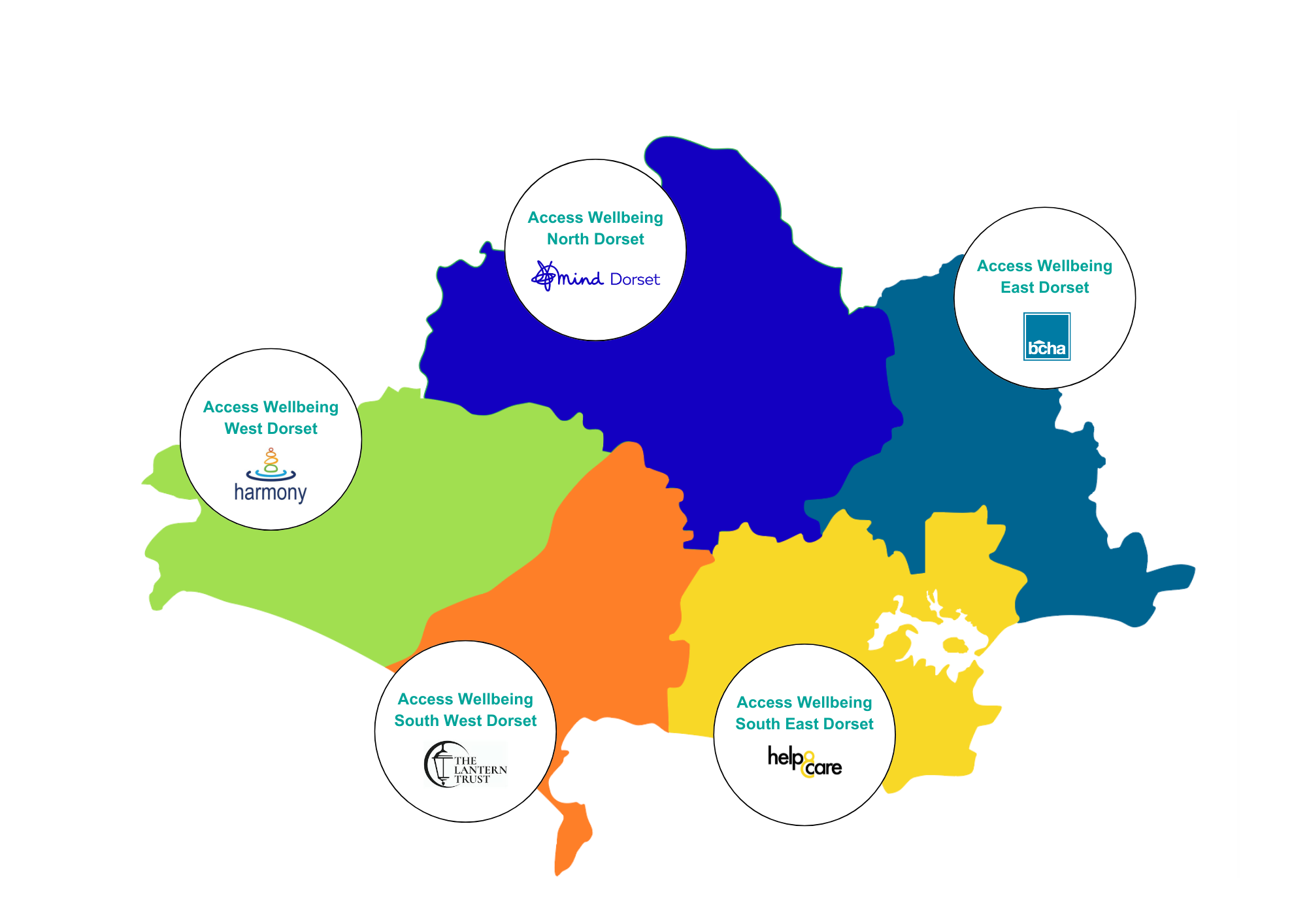
Access Wellbeing is a partnership between Dorset HealthCare NHS Foundation Trust and five charity partners – BCHA, Help & Care, The Lantern Trust, Dorset Mind and Harmony. Each charity manages services within one area of Dorset, shown in the map below. The teams in our hubs also work with other organisations across the local community, to connect services and help people find the support they need.
Access Wellbeing services are for anyone in Dorset aged 18 and over. If anyone under 18 visits a hub or drop-in space, we will always signpost them to the right support elsewhere and won’t turn them away.
There are different rules on bringing dogs to our spaces, based on the requirements of the venues and the services that use them.
If you are visiting one of our drop-in spaces in an existing community setting, please check with the venue itself before visiting.
You can find your nearest hub or drop-in space on this website by visiting our Places and Spaces section. All of our services except for the Weymouth & Portland hub work on a drop-in basis so you don’t need an appointment – just pop in any time during the opening times listed on our website.
You can choose to visit any Access Wellbeing drop-in space that you would like to – it doesn’t have to be the one that’s nearest to you or your local GP surgery. Find a list of all our hubs and drop-in spaces on this website by visiting our Places and Spaces section. All of our services except for the Weymouth & Portland hub work on a drop-in basis so you don’t need an appointment
Support in Access Wellbeing spaces is provided by our friendly wellbeing coordinators. They can take the time to listen, then help you to access the right help and support. That might be for mental health and emotional wellbeing, or support with practical worries such as money, housing or work. They can also connect you to other local organisations in the area that can provide specialist support, and help you as you navigate services to ensure you’re getting the right support.
Sometimes when you’re feeling overwhelmed or worried, it can be hard to know where to turn so we are here to help – whatever is on your mind. Our team can help you to find support on topics including:
Our hubs and drop-in spaces don’t provide mental health crisis support. If you are in or nearing crisis, you can find support through one of the organisations listed in Help Me Now section.
Yes, many people see our wellbeing coordinators for repeat sessions – sometimes in a series of appointments – so we can help you to get the support you need, whether that is through us or by helping you to access services elsewhere. When we first see you, we will invite you back for another appointment if needed at a time that works for you. As our services are drop-in, you can also pop in at any time if something is on your mind.
Our wellbeing coordinators come from a variety of different backgrounds across health, social care, and wider services. Their role descriptions do not require a clinical background but certain key skills are essential. These may have been developed through a range of different work experience routes, and include:
Wellbeing coordinators don’t provide any formal therapeutic treatment, but use their strengths in order to support people and discuss possible pathways that can help them. Wellbeing coordinators receive full training appropriate to their role.
Usually we can see people straight away but there may be a short wait if we’re really busy. If a wellbeing coordinator isn’t available when you first arrive, we will ask you if you’re happy to wait, show you to a seating area and offer refreshments. If you would prefer not to wait, you can arrange to come back at a designated time.
The duration of people’s visits varies – some people come and go very quickly with their questions answered, whilst other people might need a much longer chat, but we will always make sure we give you the time you need.